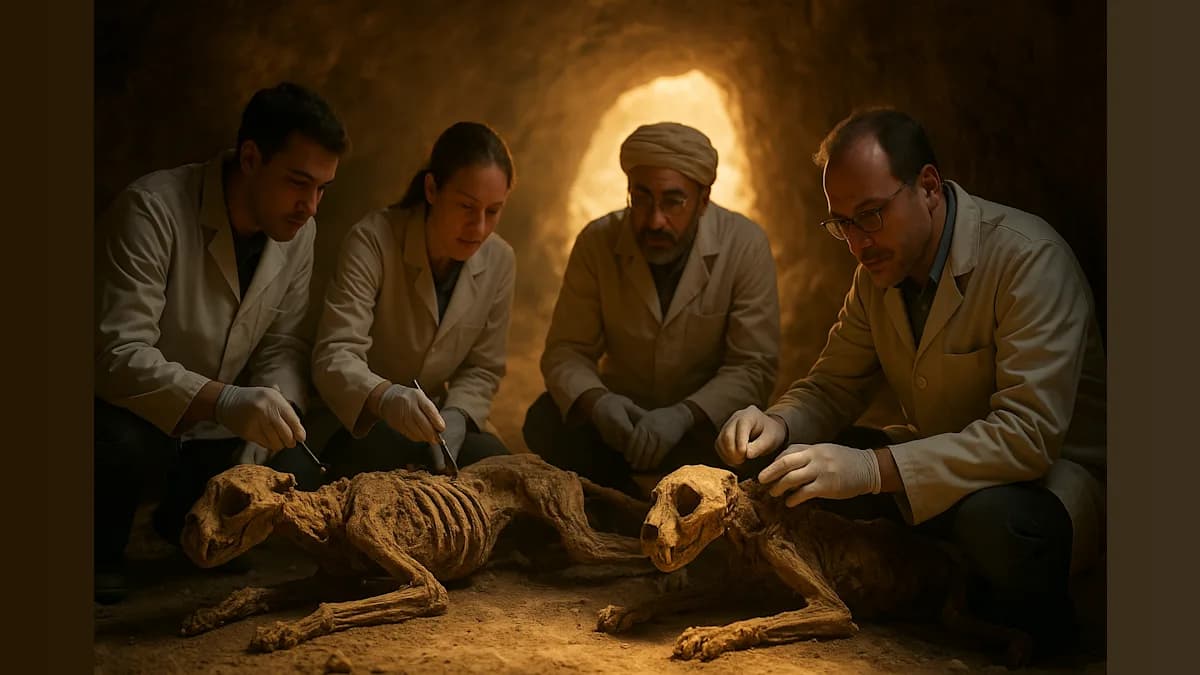
A groundbreaking discovery in Saudi Arabia has researchers buzzing: seven naturally mummified cheetah skeletons have been found in caves, offering a glimpse into the past and a potential path to the future. These incredible mummies suggest that at least two subspecies of these swift big cats once roamed the Arabian Peninsula, long before they vanished from the region. The implications for rewilding efforts are tantalizing, as scientists extract genetic information that could help bring these majestic animals back to life.
Dr. Ahmed Boug and his team made the exciting find while surveying over 1,000 caves, aiming to learn more about the ancient fauna that once inhabited the area. The oldest remains date back nearly 4,000 years, while others are much more recent, prompting questions about how such once-thriving species could disappear virtually overnight. If successful, reintroducing cheetahs could not only restore a piece of the ecosystem but also signal hope for wildlife conservation in a world where extinctions are becoming all too common.
With the right genetic and ecological strategies in place, we might just see cheetahs sprinting across the sands of Arabia again. Wouldn’t it be wild to witness these sleek predators reclaiming their rightful home? Nature has a way of surprising us, and as history shows, it’s never too late for a comeback story.
About the Author
Local Lawton
Local Lawton is a contributor to LocalBeat, covering local news and community stories.